Introduction
Glass distillation reactors are essential pieces of equipment in modern laboratories, particularly in chemical synthesis, purification, and solvent recovery. Made from high-quality borosilicate glass, these reactors offer superior visibility, corrosion resistance, and temperature stability, making them ideal for a wide range of laboratory experiments. Their transparent design allows scientists to visually monitor reactions, improving both accuracy and safety during experimental processes.
Components the Glass Distillation Reactor
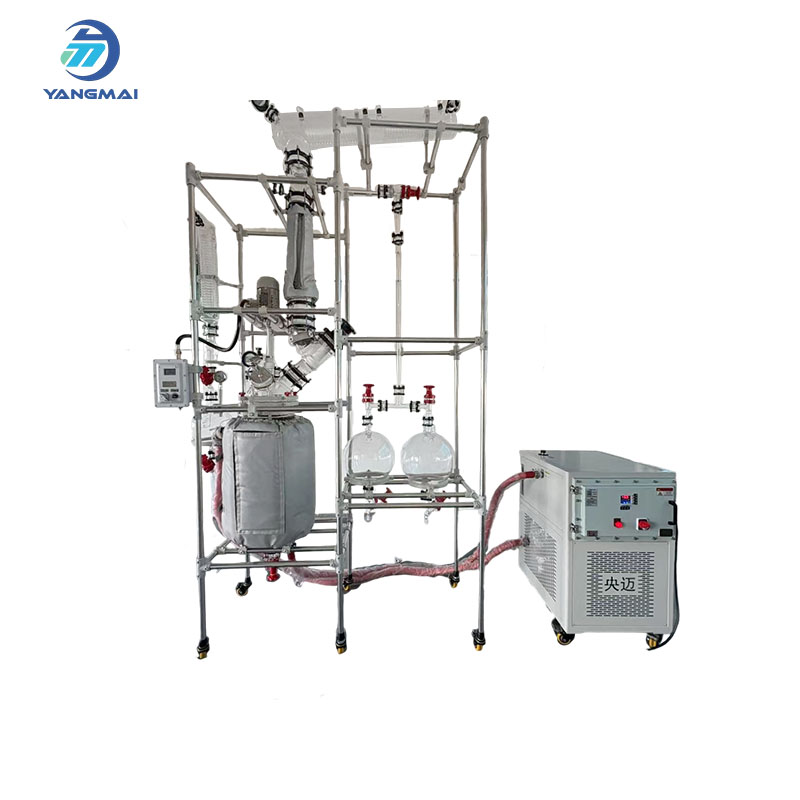
A glass distillation reactor integrates reaction, evaporation, and condensation processes within one sealed glass system. Typically, it consists of a reaction tank, a condenser, and collection flasks connected with temperature control machine.
This apparatus enables efficient separation and purification of chemical compounds by utilizing differences in boiling points under controlled temperature and pressure conditions.
Applications in Modern Laboratories
1. Chemical Synthesis
In organic and inorganic chemistry, glass distillation reactors are widely used for synthesis and purification of compounds. The system allows precise temperature control, ensuring reaction stability and product quality.
2. Pharmaceutical Research
In pharmaceutical development, researchers use glass reactors to refine drug intermediates and separate volatile compounds. The ability to maintain sterile and visible environments supports accurate quality control.
3. Solvent Recovery and Recycling
Glass distillation reactors are commonly used for solvent recovery in laboratory processes. By distilling and condensing solvents, labs can reduce waste, save costs, and maintain a more sustainable workflow.
4. Purification and Crystallization
During purification, the reactor helps isolate pure substances from complex mixtures. It also enables controlled crystallization—important in producing high-purity materials for further testing or production.
5. Educational and Research Institutions
In academic and R&D environments, glass reactors are excellent tools for teaching distillation principles, studying reaction kinetics, and testing new materials or catalysts under controlled conditions.
Advantages of Using Glass Distillation Reactors
1. High Chemical Resistance: Borosilicate glass provides excellent durability against strong acids and alkalis.
2. Visual Observation: Transparent design allows real-time monitoring of chemical changes.
3. Wide Temperature Range: Suitable for heating and cooling between -80°C and +250°C.
4. Customizable Structure: Modular design enables easy scaling for different experiment sizes.
5. Eco-Friendly Operation: Reduces solvent loss and promotes efficient energy usage.
Conclusion
Glass distillation reactors play a vital role in advancing laboratory efficiency and experimental precision. Their versatility and clarity make them indispensable in chemical synthesis, purification, and research development. Whether in a university laboratory or industrial research center, these reactors help ensure safer, cleaner, and more controlled chemical processes.
Tags :

WhatsApp : +8615665455996
Email : vera@yangmaireactor.com
Tel : +86 -13053083981