other
  • Practical Applications of Glass Distillation Reactors in Modern Laboratories
    Practical Applications of Glass Distillation Reactors in Modern Laboratories Oct 29, 2025
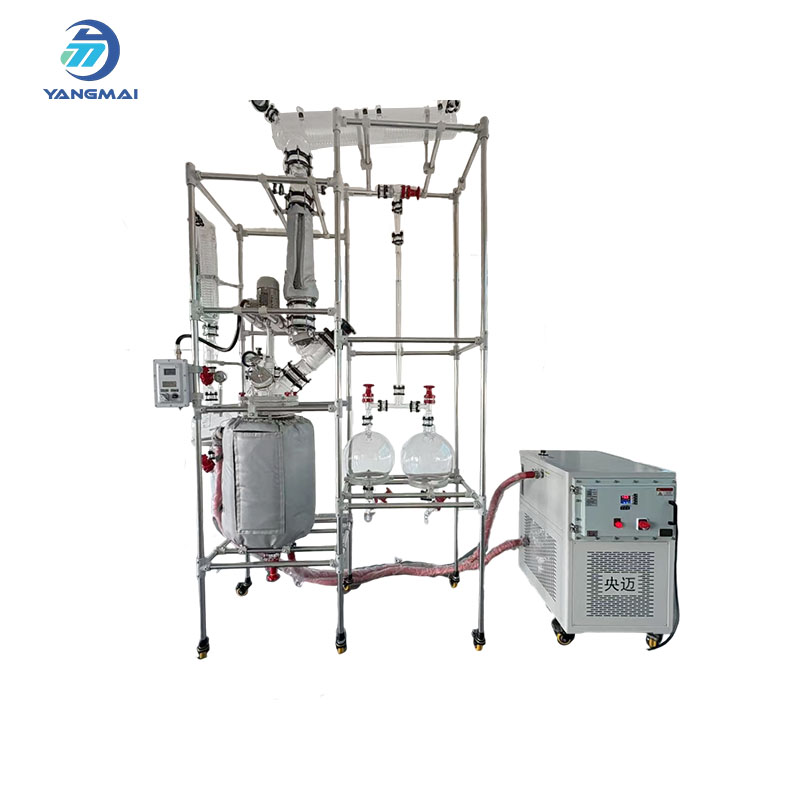
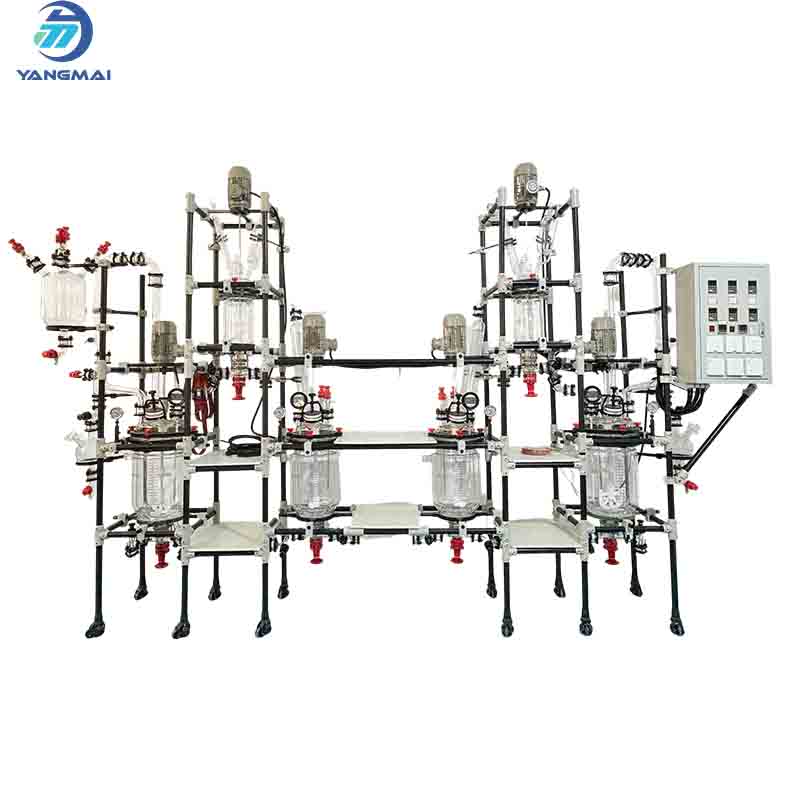
    Introduction Glass distillation reactors are essential pieces of equipment in modern laboratories, particularly in chemical synthesis, purification, and solvent recovery. Made from high-quality borosilicate glass, these reactors offer superior visibility, corrosion resistance, and temperature stability, making them ideal for a wide range of laboratory experiments. Their transparent design allows scientists to visually monitor reactions, improving both accuracy and safety during experimental processes.   Components the Glass Distillation Reactor A glass distillation reactor integrates reaction, evaporation, and condensation processes within one sealed glass system. Typically, it consists of a reaction tank, a condenser, and collection flasks connected with temperature control machine. This apparatus enables efficient separation and purification of chemical compounds by utilizing differences in boiling points under controlled temperature and pressure conditions.   Applications in Modern Laboratories 1. Chemical Synthesis In organic and inorganic chemistry, glass distillation reactors are widely used for synthesis and purification of compounds. The system allows precise temperature control, ensuring reaction stability and product quality. 2. Pharmaceutical Research In pharmaceutical development, researchers use glass reactors to refine drug intermediates and separate volatile compounds. The ability to maintain sterile and visible environments supports accurate quality control. 3. Solvent Recovery and Recycling Glass distillation reactors are commonly used for solvent recovery in laboratory processes. By distilling and condensing solvents, labs can reduce waste, save costs, and maintain a more sustainable workflow. 4. Purification and Crystallization During purification, the reactor helps isolate pure substances from complex mixtures. It also enables controlled crystallization—important in producing high-purity materials for further testing or production. 5. Educational and Research Institutions In academic and R&D environments, glass reactors are excellent tools for teaching distillation principles, studying reaction kinetics, and testing new materials or catalysts under controlled conditions.   Advantages of Using Glass Distillation Reactors 1. High Chemical Resistance: Borosilicate glass provides excellent durability against strong acids and alkalis. 2. Visual Observation: Transparent design allows real-time monitoring of chemical changes. 3. Wide Temperature Range: Suitable for heating and cooling between -80°C and +250°C. 4. Customizable Structure: Modular design enables easy scaling for different experiment sizes. 5. Eco-Friendly Operation: Reduces solvent loss and promotes efficient energy usage.   Conclusion Glass distillation reactors play a vital role in advancing laboratory efficiency and experimental precision. Their versatility and clarity make them indispensable in chemical synthesis, purification, and research development. Whether in a university laboratory or industrial research center, these reactors help ensure safer, cleaner, and more controlled chemical processes.
  • Why Choose Borosilicate Glass Reactors for Organic Chemistry?
    Why Choose Borosilicate Glass Reactors for Organic Chemistry? Sep 24, 2025
    Organic chemistry experiments require precise control, safety, and visibility during chemical reactions. Borosilicate glass reactors have become the preferred choice in laboratories and pilot plants due to their unique combination of chemical resistance, thermal stability, and transparency. Here’s why borosilicate glass reactors are essential for organic chemistry.   Excellent Chemical Resistance Borosilicate glass is highly resistant to acids, bases, and most organic solvents. This property ensures that the reactor does not react with the chemicals inside, preventing contamination and maintaining the purity of the reaction products. Whether you are performing synthesis, crystallization, or distillation, borosilicate glass offers a reliable solution. Superior Thermal Stability Many organic chemistry reactions require precise heating or cooling. Borosilicate glass can withstand rapid temperature changes and high temperatures without cracking. Its thermal stability allows researchers to safely perform reflux reactions, heating under vacuum, or cooling sensitive compounds, making experiments more efficient and predictable.   Transparent Design for Real-Time Observation Unlike metal reactors, borosilicate glass reactors provide full visibility of the reaction process. Researchers can monitor color changes, precipitation, and phase separation in real time, which is crucial for reaction optimization and quality control.   Modular and Versatile Configurations Borosilicate glass reactors often come with modular designs, allowing integration of stirrers, condensers, vacuum systems, and addition funnels. This flexibility is perfect for small-scale organic synthesis, pilot plant experiments, and laboratory research. You can customize the setup for heating, cooling, vacuum distillation, or multi-step synthesis. Safety and Durability High-quality borosilicate glass is strong and corrosion-resistant, reducing the risk of leaks and breakage. Combined with stainless-steel frames and secure clamps, these reactors provide safe operation even under high pressure or vacuum conditions, ensuring reliable results in organic chemistry labs.   Conclusion For organic chemistry research and pilot-scale experiments, borosilicate glass reactors are the ideal choice. They combine chemical resistance, thermal stability, transparency, and modularity to meet the demanding needs of modern laboratories. Investing in a borosilicate glass reactor ensures safe, efficient, and high-quality chemical reactions.    
leave a message

leave a message
For any request of information or technical support, fill in the form. All fields marked with an asterisk* are required.
Submit
Contact us :
+86 -13053083981

Home

Products

WhatsApp

contact