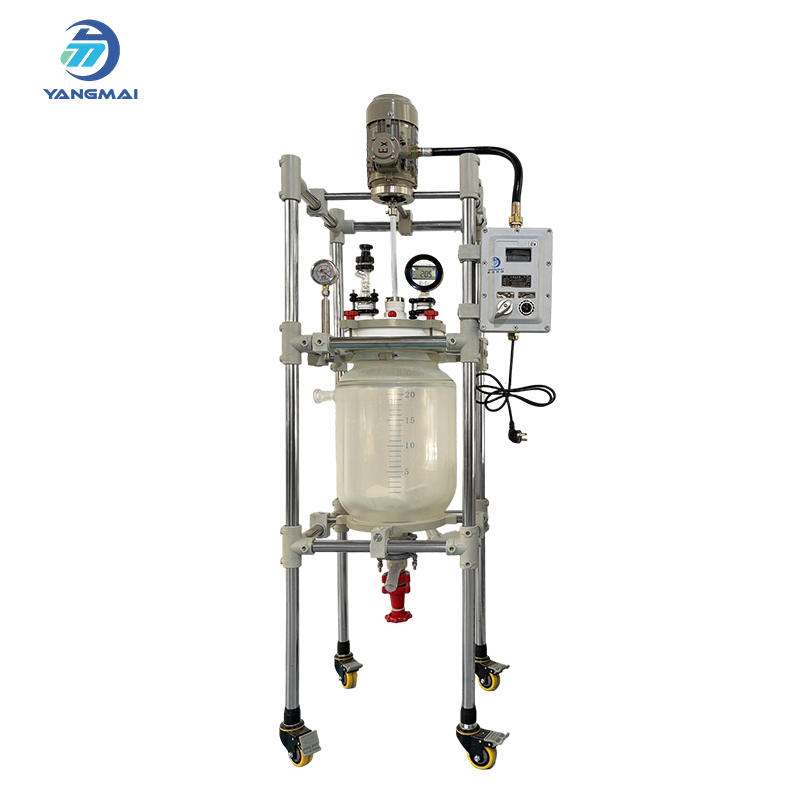
PTFE Lined Glass Reactor: The Ideal Solution for Corrosive Chemical Processes
Jun 05, 2026
Why Choose a PTFE-Lined Glass Reactor?
In chemical processing, standard borosilicate glass reactors offer excellent visibility and corrosion resistance. However, when dealing with highly alkaline solutions, aggressive chemicals, or materials that tend to adhere to glass surfaces, a PTFE-lined glass reactor becomes a more reliable solution.
Enhanced Corrosion Protection
The PTFE lining creates an additional protective barrier between the process material and the glass surface.
It is particularly suitable for:
Strong alkaline solutions
Corrosive chemical reactions
Special pharmaceutical intermediates
High-purity chemical production
At Yangmai, PTFE-lined reactors are often recommended for applications where standard glass may experience long-term chemical attack.
Reduced Material Adhesion
Some viscous materials or crystallizing products can easily stick to glass surfaces, affecting product recovery and cleaning efficiency.
Benefits of PTFE lining include:
Non-stick surface
Easier product discharge
Reduced residue accumulation
Faster cleaning between batches
Improved Equipment Service Life
By minimizing direct contact between aggressive materials and the glass vessel, PTFE lining helps extend reactor service life and reduce maintenance costs.
This makes Yangmai PTFE-lined glass reactors an excellent choice for continuous laboratory and pilot-scale operations.
Typical Applications
A. Sodium hydroxide (NaOH) processing;
B. Lithium battery material research;
C. Pharmaceutical synthesis;
D. Fine chemical production;
E. Corrosive material testing;
The Yangmai Advantage
Yangmai provides customized PTFE-lined glass reactors with various capacities and configurations. Our systems combine the visibility of glass with the chemical resistance of PTFE, offering a safer and more durable solution for demanding chemical processes.
Whether for laboratory research or pilot-scale production, Yangmai can help you select the most suitable reactor configuration for your application.